
Tips for Dealing with Overly Salty Food
17 March 2026
Salt contains compounds NaCLàNaCl (Sodium Chloride), each adult only needs a maximum of 5g of salt per day (According to the World Health Organization (WHO), in Keiko Alkes, 2025). Salt itself is widely used to enhance the flavor of food and as a natural preservative. However, dishes that are too salty can increase the risk of hypertension, frequent thirst, headaches, and other illnesses. To neutralize foods that are too salty, there are several ways to do the following:
1. Dilute with salt-free liquid
The easiest way to address saltiness in food is to add liquid, such as water, broth, milk, liquid cooking cream, or coconut milk, depending on the type of dish. This liquid will help dilute saltiness. This method is especially effective for dishes like soups, stews, and sauces, as the liquid helps distribute the saltiness evenly.
2. Add cooking ingredients
Increasing the volume of a dish can help balance the taste by adding the following food ingredients: vegetables, noodles, rice, or meat, according to the type of dish being prepared.
3. Potato trick (Use with caution)
Potatoes can absorb saltiness, so it's a great way to balance out overly salty dishes by adding a few potato slices to the dish and cooking for a few minutes. Once done, remove the potato slices. The saltiness will be absorbed into the potatoes, and the dish will be more satisfying.
4. Rinse or soak the salty ingredients
If ingredients such as vegetables or meat are already too salty, rinse them.in a way fast below flow cold water can reduce salt on the surface. After that, dry it and exercise back as needed.
5. Serve with neutral side dishes
Pair a salty main dish with a neutral side dish like white rice, white bread, or steamed vegetables to balance each bite. This simple method effectively reduces overall saltiness.
Tips to prevent food from becoming too salty
1. Follow the recipe instructions carefully
Use the right type of salt. Table salt, sea salt, and Kosher salt each have different saltiness levels. If a recipe calls for a low-sodium ingredient, such as low-sodium soy sauce or unsalted broth, be sure to use that ingredient. If you use a salted version and still add the required amount of salt, the result will be too salty.
2. Use the right measuring tools
Digital scales, measuring spoons or measuring cups can help maintain accuracy in the amount of salt used.
3. Smart Salt
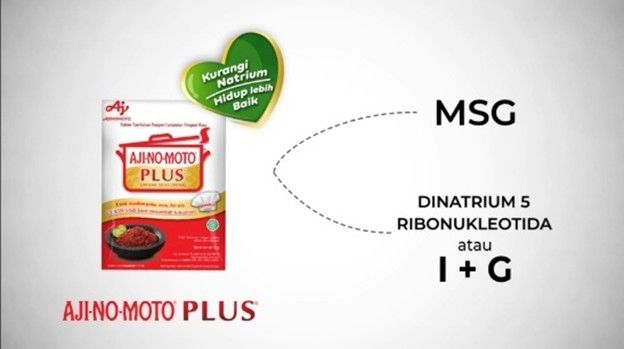
Smart Salt is the activity of reducing salt use by adding Umami Seasonings such as MSG into cooking process to keep the food tasting good.
Prevention is by controlling salt consumption.
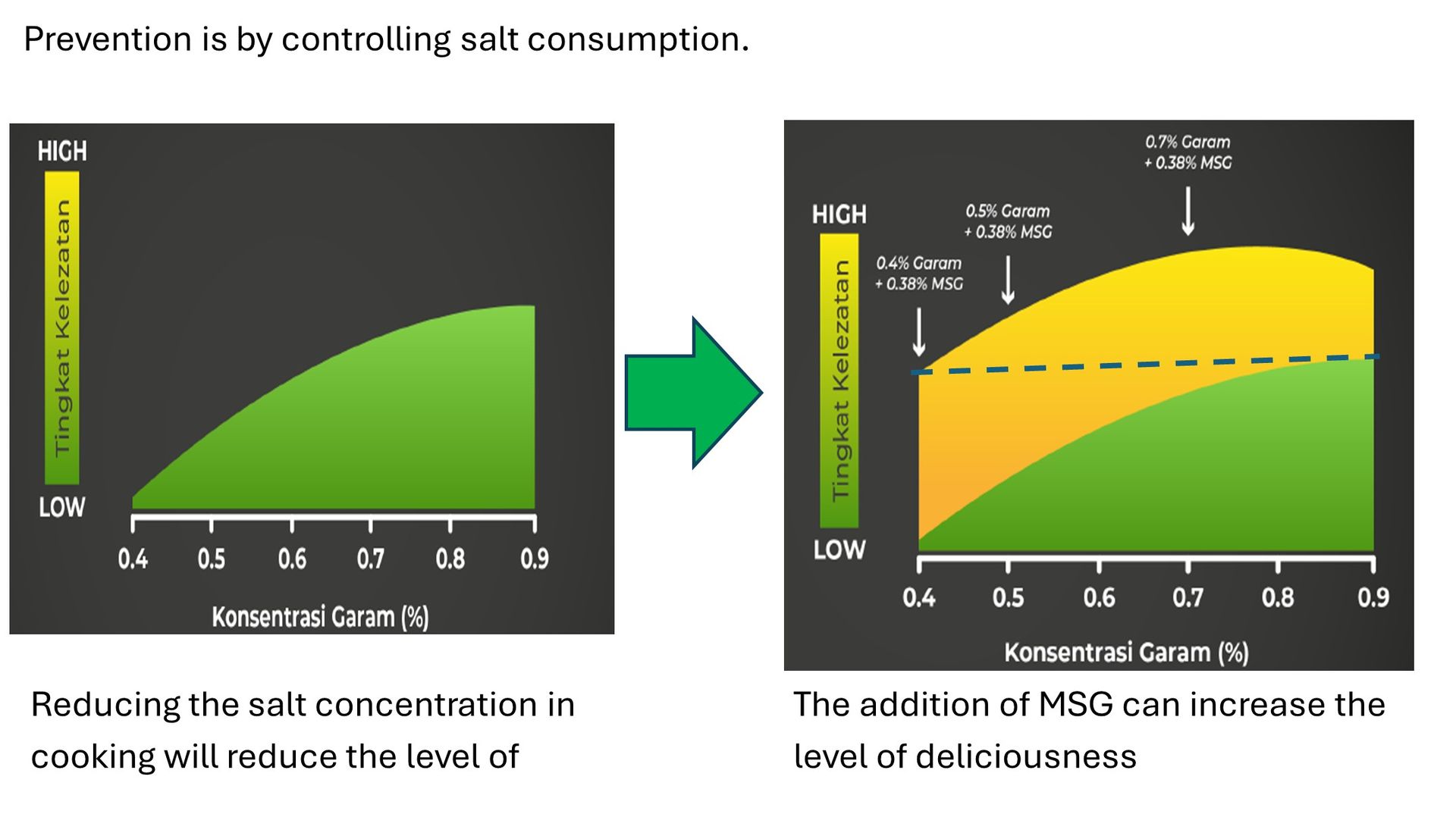
The combination of MSG and Disodium 5-ribonucleotide in AJI-NO-MOTO® PLUS® provides a synergistic effect, increasing the umami taste and harmony which can add to the deliciousness of food, especially spicy, sour and salty foods.
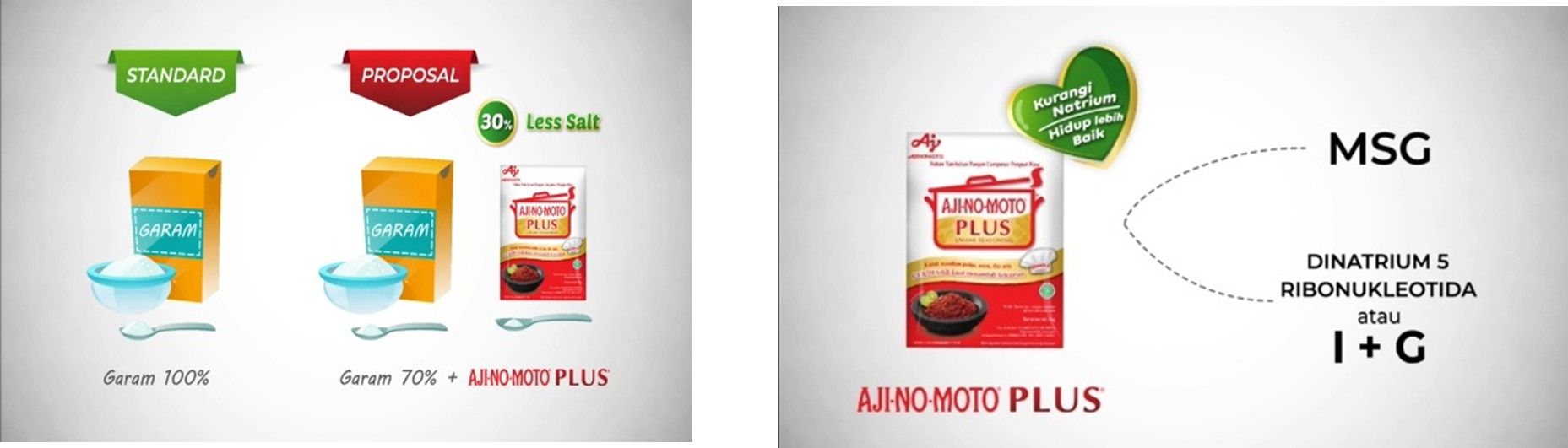
The results of the study showed that the taste of food with a 30% reduction in salt and the addition of the AJI-NO-MOTO® PLUS® product can produce a taste that is close to food using 100% salt.


